01 / Problem
Houseplant owners often notice plant stress too late because environmental changes like soil moisture, light, temperature, and humidity are easy to overlook. Canopy AI explored whether a low-cost sensing system could help plant owners understand conditions earlier and respond with better recommendations.
02 / What I built
I built a hardware-software plant monitoring prototype paired with VerdantLabs.app, a product website and software experience that explored plant dashboards, AI-assisted recommendations, early-access flow, pricing concepts, and product storytelling.
03 / Hardware
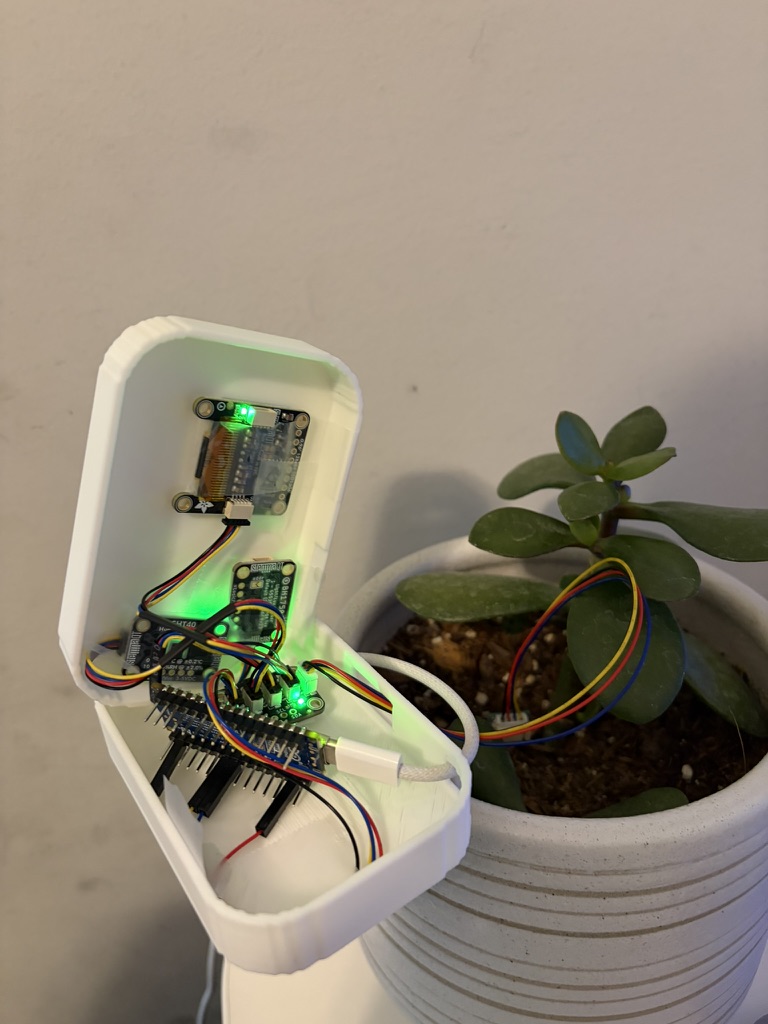
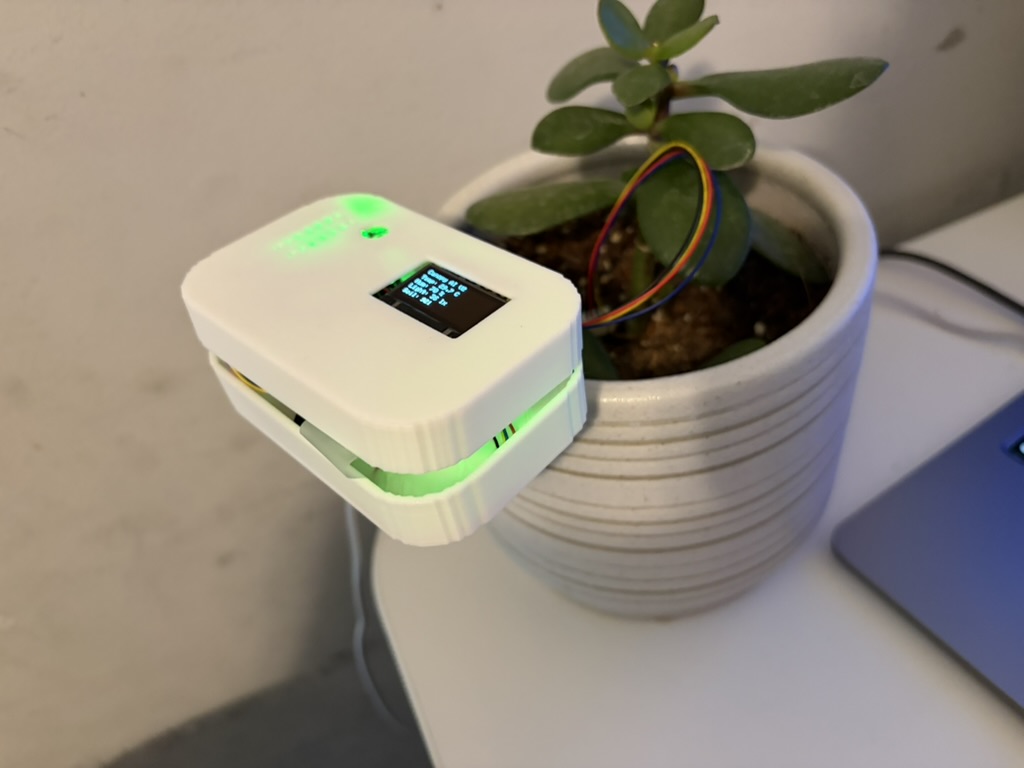
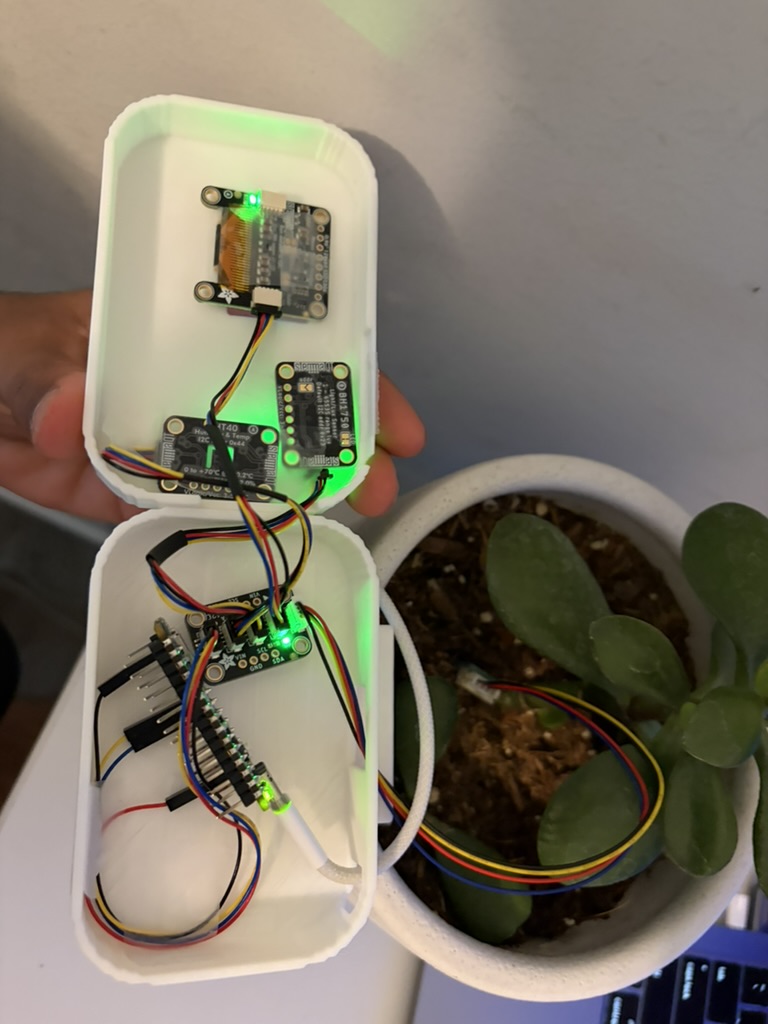
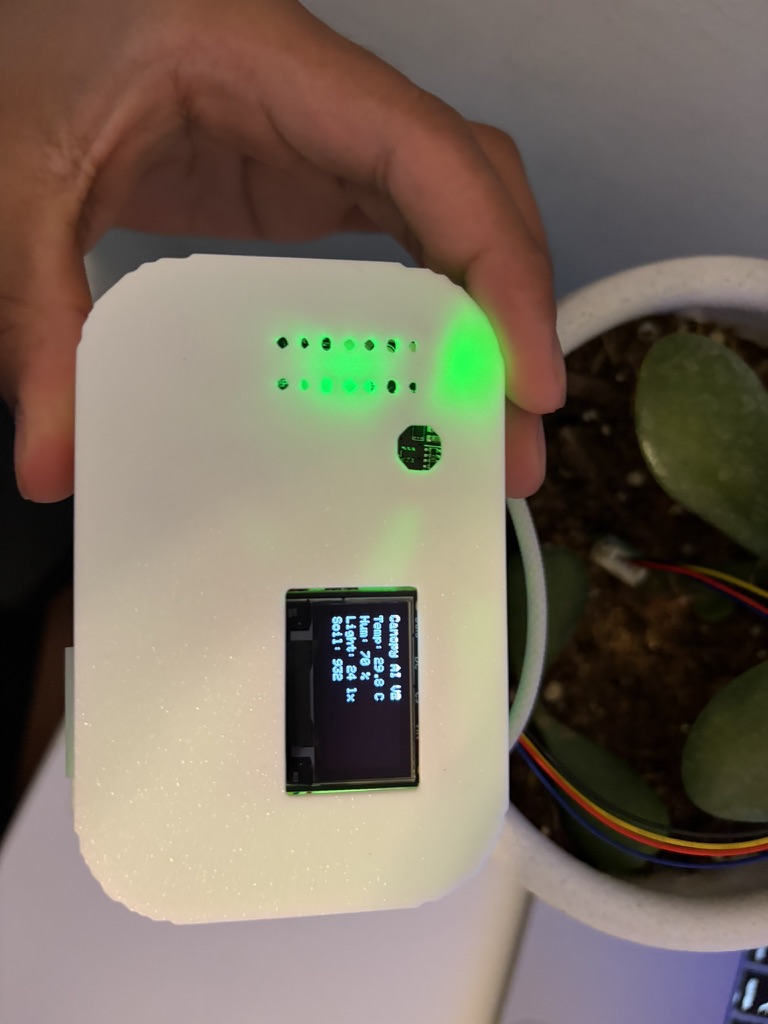
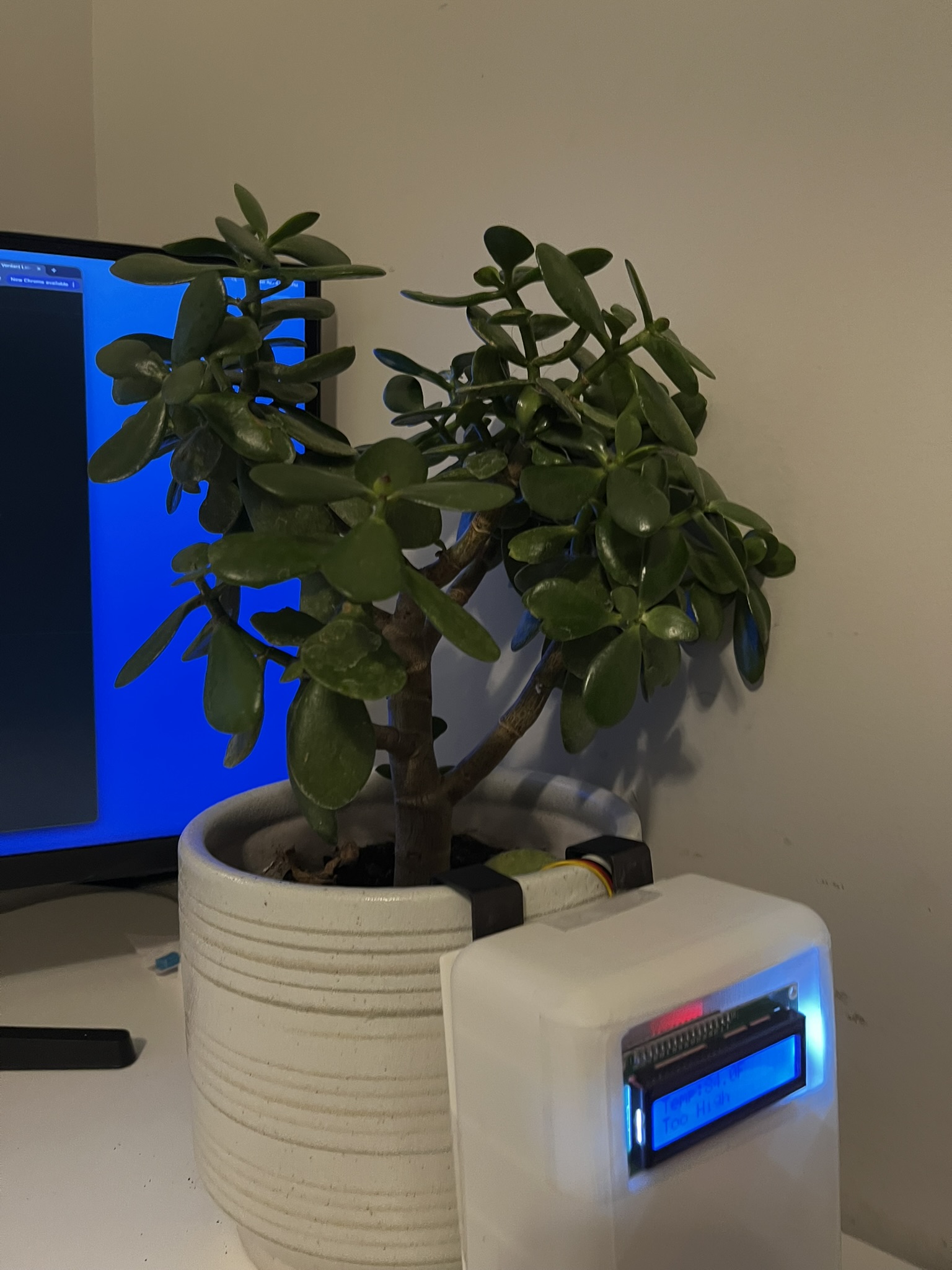
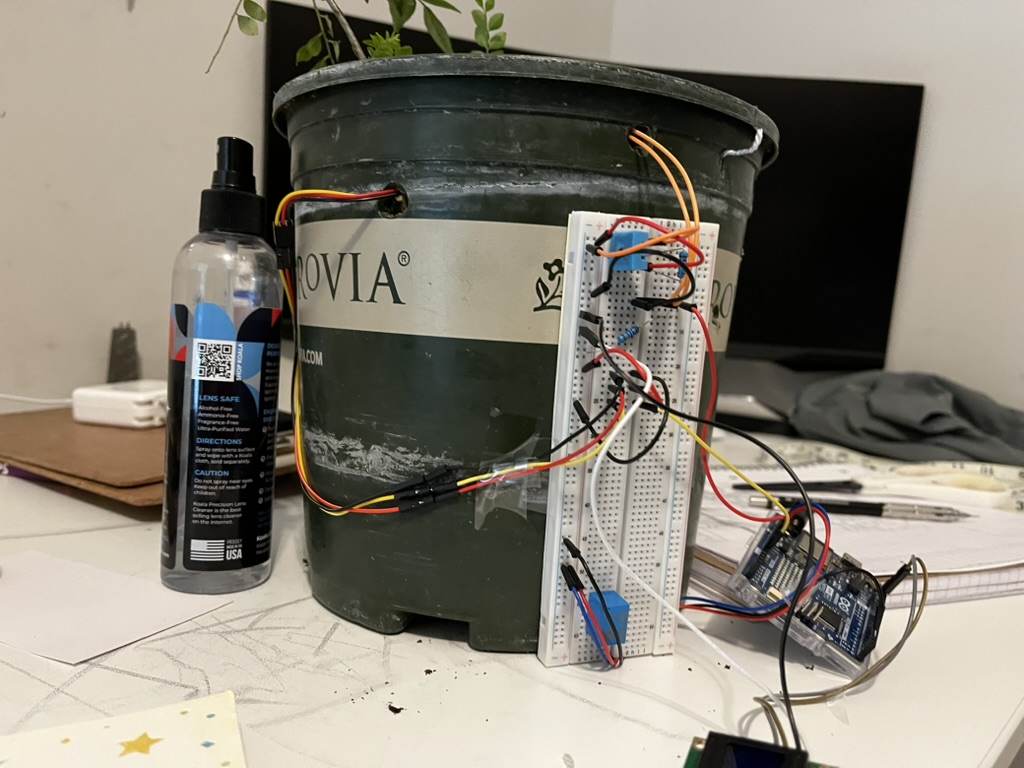
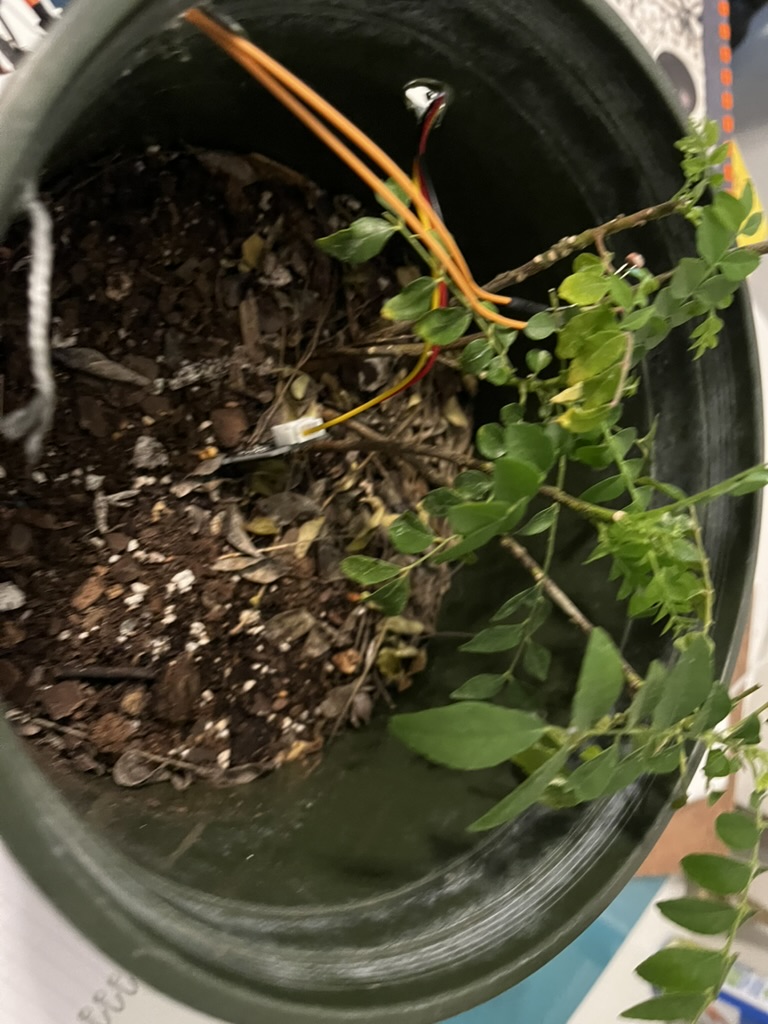
V1 started with Arduino Uno R4 WiFi, a photoresistor light sensor, a capacitive soil moisture sensor, and a temperature/humidity sensor. V2 upgraded to Arduino Nano ESP32, SHT40, BH1750, an Adafruit STEMMA capacitive soil moisture sensor, a STEMMA QT hub, and a 3D-printed enclosure.
04 / Software / Website
VerdantLabs.app served as the public product website and software side of the project. It included product explanation, app preview concepts, plant-care recommendations, early access flow, pricing mockups, a prototype dashboard, Camera Studio concepts, collection dashboard ideas, and a plant care library.
05 / AI
AI was used to support recommendation generation and some software-side features on the Verdant Labs website.
06 / Process
The project moved through multiple rounds of prototyping, product design in Tinkercad, pitch preparation for StartedUP, hardware iteration from V1 to V2, sensor and microcontroller upgrades, CAD iteration, cost-of-goods thinking, growth planning, and lean canvas/business model work.
- Learned the difference between a prototype, a pitch, and a product-quality system.
- CAD and enclosure design turned out to be one of the most practical and difficult parts of the build.
07 / Results / Learnings
Canopy AI advanced to StartedUP Region 1 Regional Finals and was showcased at the StartedUP Summit as an Emerging Innovator. The biggest learnings were about iteration, product design, COGS, growth planning, lean canvas thinking, and how hardware, software, and product storytelling connect.
08 / Field note
This project is best understood as a learning archive entry about iteration and product thinking, not a finished product claim.
Field note
This case study is documented as a learning-focused archive entry, not a finished product claim.